
The Mental Load: How Carrying Too Much Mentally, Can Affect Our Bodies More Than We Realise
Have you ever felt exhausted despite getting enough sleep?
Found yourself snapping at loved ones, struggling to switch off, or carrying constant tension in your neck and shoulders without really knowing why?
For many people, the answer lies in something we often overlook: the mental load 🫨.
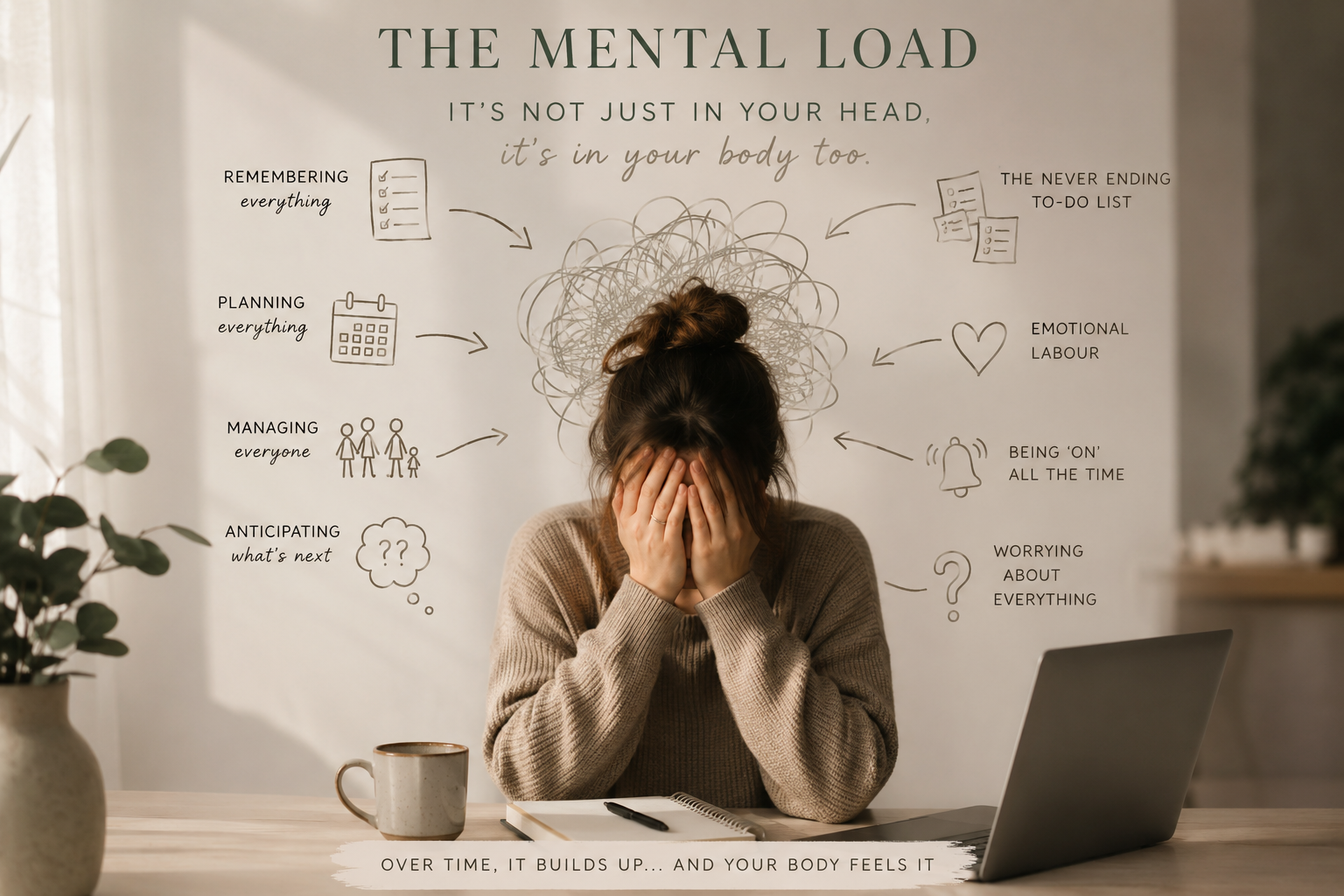
It's not always the big, dramatic stresses that affect us most. More often, it's the constant background noise of everyday life - the remembering, planning, organising, worrying, anticipating, and carrying responsibility for ourselves and others.
Over time, that invisible load can begin to affect both our emotional wellbeing and our physical health. Many people don't realise that the mental load can create very real physical symptoms in the body.
What Is the Mental Load?
The mental load refers to the ongoing cognitive and emotional effort involved in managing daily life.
It's the endless list running through your mind:
Remembering appointments
Planning meals
Managing work deadlines
Looking after children or family members
Responding to messages
Organising household tasks
Thinking ahead to the next thing
Even during moments that should be restful, many people find their minds still racing through tomorrow's to-do list.
Because it's largely invisible, we often underestimate just how draining it can be.
How the Mental Load Affects Stress Levels
When the brain perceives constant demands, it can keep the body in a state of heightened alertness.
This doesn't necessarily mean feeling anxious all the time.
In fact, many people simply describe feeling:
Wired but tired
Easily overwhelmed
Unable to switch off
Emotionally drained
Less resilient than they used to be
Over time, this persistent state of stress can influence sleep quality, energy levels, mood, concentration, and overall wellbeing.
The Physical Signs You Might Be Carrying Too Much
One of the most fascinating things about the body is that it often communicates what the mind has been trying to manage.
The mental load frequently shows up physically as:
Neck and Shoulder Tension
Many people unconsciously brace their shoulders or tighten muscles around the neck when stressed or concentrating.
Headaches
Persistent muscle tension, poor posture, and ongoing stress can contribute to recurring headaches.
Jaw Clenching
Stress often manifests through jaw tension, teeth grinding, and facial tightness.
Fatigue
Even when you're not physically active, carrying constant mental demands can feel exhausting.
Poor Sleep
A busy mind can make it difficult to fall asleep, stay asleep, or wake feeling refreshed.
Digestive Changes
Stress can influence digestion, appetite, and feelings of bloating or discomfort.
General Aches and Pains
Many people simply describe feeling "tight everywhere" without a clear physical cause.
Why We Often Don't Notice It
Humans are remarkably adaptable.
We get used to feeling tired.
We get used to tension.
We get used to being "on" all the time.
Eventually, these symptoms can start to feel normal.
It's often only when people experience genuine relaxation that they realise how much stress they had been carrying.
One of the most common things I hear after a treatment is:
"I didn't realise how much I needed that."
How Massage Can Help
Massage isn't a ‘cure’ for stress, burnout, anxiety, or the demands of modern life. But what it can do is create an opportunity for the body to step out of its usual state of tension and alertness.
Through intentional therapeutic touch, massage can help:
Reduce muscular tension
Ease neck, shoulder, and back discomfort
Encourage relaxation
Support better sleep quality
Create a sense of calm and grounding
Help you reconnect with your body
Calm the nervous system
Provide dedicated time away from daily demands
Many clients notice they breathe more deeply, move more freely, and feel mentally clearer after a treatment.
Sometimes the greatest benefit isn't simply the release of tight muscles. It's being given permission to pause.
You Don't Have to Wait Until You're Burnt Out
One of the biggest misconceptions about self-care is that it should only happen when we're struggling. But the truth is, ongoing, regular, consistent support is often more beneficial than waiting until we're completely exhausted.
If you've been feeling:
Constantly tired
Overwhelmed by the mental load
Unable to switch off
Stressed or emotionally drained
Tight through the neck, shoulders, or jaw
Disconnected from yourself
Like you’re running on fumes
Your body and mind may simply be craving a little more support. Creating space to slow down is exactly what allows us to show up more fully in other areas of life.
Holistic & Remedial Massage in Shipston-on-Stour
At Rosie Holland Holistic Massage, treatments are tailored to the individual, combining deep tissue techniques, sports massage, Eastern and Western approaches, lymphatic drainage, pregnancy massage, Indian head massage, and holistic bodywork to support both physical comfort and emotional wellbeing.
Whether you're carrying the mental load of work, family life, stress, recovery, or simply feeling unlike yourself lately, massage can offer a valuable opportunity to pause, reset, and reconnect. You don’t have to carry it all alone.
Based in Shipston-on-Stour, serving clients across the Cotswolds and surrounding areas.